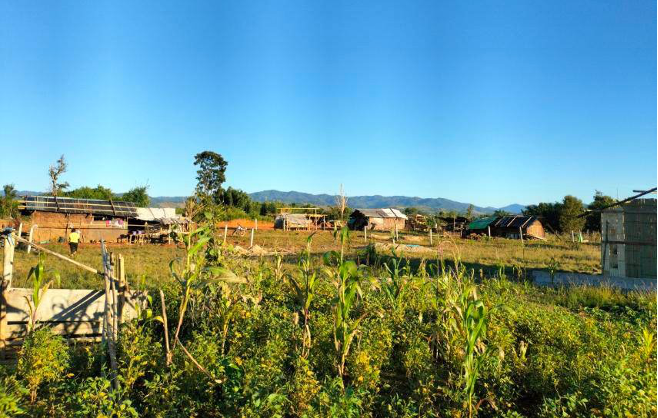
Refugees from Namphatkar KBC IDP camp in Kutkai Township in northern Shan State are worried as they are going to move to the region-4 ward in Namphatkar where they may face a shortage of drinking water.
The new location faces a shortage of water every year. Now about eight IDP families who have moved to the new place are facing water shortage problems.
A female IDP said: “We face a shortage of drinking water. Drinking water is not sufficient even for a very few households. We have to collect water in the morning and the evening.”
The IDPs mainly use water from water channels distributed to farms. Water in the channels run dry in the summer and before the rainy season, locals said.
The female IDP said: “The IDP camp has many children and women. They have to walk for about 40 minutes from the camp to Nanmaw creek to wash their clothes and take a bath. Only the elderly IDPs have to use the water from the channels. They find it difficult to wash their clothes.”
Over 300 IDPs plan to move to the new place before the rainy season. They have called on the authorities to solve the water shortage problem.
Local Christin associations and the ICRC will help the IDPs to move to Region-4 ward in Namphatkar.
A female IDP said: “We have been living in the compound of the KBC church for more than ten years. The KBC has the projects to construct buildings. The poles of houses are no longer good as we have been living here for more than ten years. We have to move to another place as it is our church.”
The Namphatkar IDP camp has over 300 populations and 62 households. A household gets a 40 ftX60 ft land. The ICRC plans to build the houses. The construction of houses starts in early May.
They have been taking shelter at Namphatkar KBC IDP camp for more than one decade. They are from Namsone, Daingari and Lwalngaw villages in northern Shan State.
The region sees frequent fighting. Not only the military council troops but also the EROs are active there.
It is inconvenient for IDPs to return to their villages. They plan to move to other places with the help of local authorities, religious organizations and some international organizations.
Sent by NMG