Introduction
ASEAN’s five-point consensus undermines its position and capacity. ASEAN should learn from the consequences of engaging with coup leader Senior General Min Aung Hlaing and the Myanmar military. The five-point consensus reached at the ASEAN emergency meeting held on 24 April 2021, has not been practically implemented even after three years.
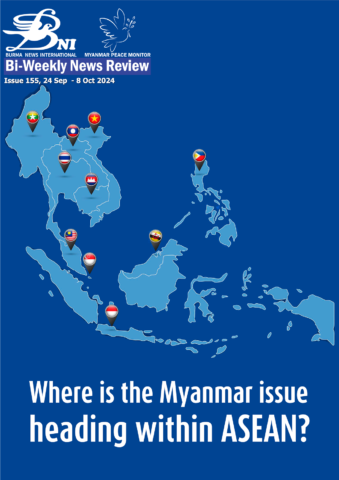
This week’s Bi-Weekly News Review highlights the emphasis on the Myanmar issue within ASEAN.
ASEAN Chair’s Statement following the Summit
The ASEAN rotating chairperson released a 44-page statement on 13 October, following the ASEAN Summit held in Vientiane, Laos, from 8 to 11 October. Page 42, Paragraph 180 of the statement includes details about discussions, key emphases, and demands related to the Myanmar issue. 1
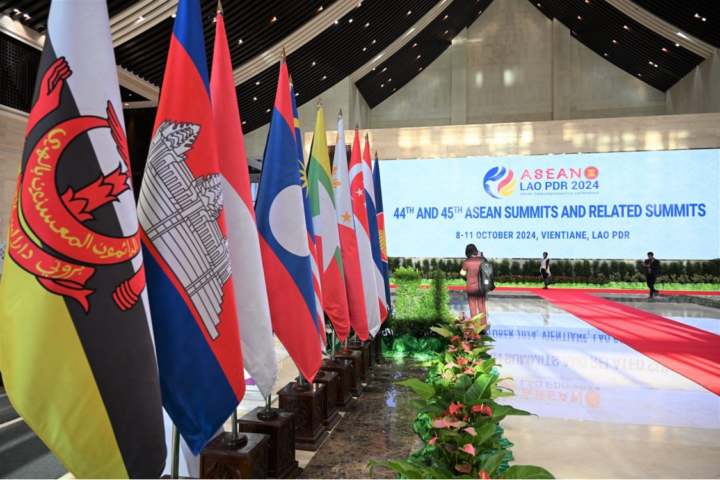
The summit reaffirmed the ongoing relevance of the ASEAN leaders’ five-point consensus, which has remained unimplemented for over three years. The statement condemned the escalating conflicts in Myanmar and called for creating conditions that would allow for humanitarian aid to be delivered and inclusive dialogue to take place.
Notably, the Myanmar military council’s Permanent Secretary of the Ministry of Foreign Affairs attended the ASEAN Summit. The junta is forced to accpet the decision made at the Emergency Meeting of ASEAN Foreign Ministers on 15 October 2021, which stated that the junta leader would not be allowed to attend the ASEAN Summit, but a “civilian representative” from Myanmar would be permitted to attend instead.” 2
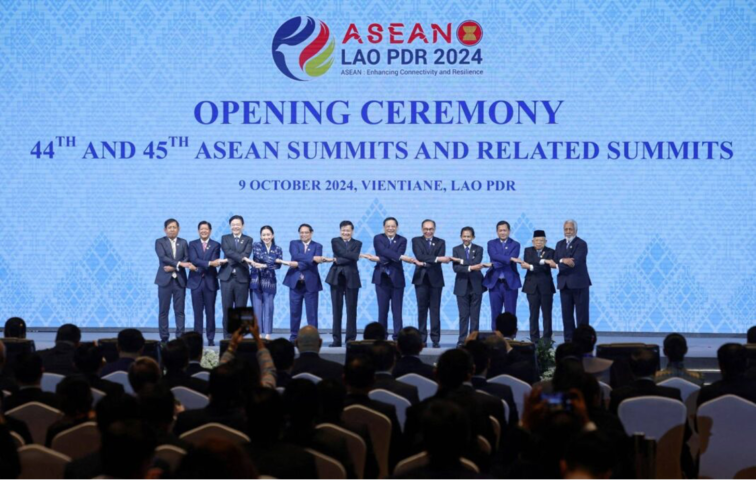
The 44 th and 45 th ASEAN Summit
However, it can be said that the Myanmar military junta, which continues to participate in international meetings led by the Chinese government, is taking steps to gain recognition for the general election they are planning to hold.
ASEAN Secretary-General Dr. Kao Kim Hourn, said that the Myanmar issue was very complicated. It needed time and patience, and that a quick fix should not be expected. 3 This raises questions about how much time ASEAN needs to effectively resolve the Myanmar issue based on the five-point consensus.
Jakarta Talks
The diplomatic talks on the Myanmar issue, held in Jakarta, Indonesia just days before the ASEAN Summit, was particularly noteworthy. It brought together revolutionary forces, including the National Unity Government (NUG), alongside representatives from international bodies such as the United Nations and the European Union (EU), without the junta’s involvement.
The talks on Myanmar held from 3 to 5 October, was attended by 18 representatives from the anti-junta groups including the NUG, the Karenni National Progressive Party (KNPP), the Karen National Union (KNU), the Chin National Front (CNF) and the Restoration Council of Shan State (RCSS). The representatives from the UN, EU, UK, US, Norway, Malaysia, and Indonesia also participated in the talks. 4
There has been no official statement regarding the topics discussed during the Jakarta talks and the future processes. However, it is reported that the “ASEAN Troika” was canceled due to disagreement from the current ASEAN rotating chair, Laos. Nonetheless, the ASEAN Chair’s statement following the summit acknowledged the talks that took place in Jakarta.
Review
ASEAN’s steps toward addressing the Myanmar issue, based on the five-point consensus, have remained stagnant, with no progress made despite years of change. By focusing on the military junta led by Senior General Min Aung Hlaing and ignoring the voices and demands of Myanmar’s people and revolutionary forces, ASEAN has constrained its own ability to act.
However, this October is significant. It is clear that efforts to implement the five-point consensus from the ASEAN Summit have failed. Nevertheless, the continued emphasis on seeking a peaceful resolution to the Myanmar issue through adherence to this consensus underscores that ASEAN has not learned from its past experiences.
Although the discussions, outcomes, and agreements from the Jakarta talks have not yet been made public, they may reflect the voices, demands and actual conditions on the ground of the revolu-tionary forces. The participation of the Malaysian representative, who will assume the ASEAN rotating chair in 2025, adds another layer of interest to the ongoing developments.
Since 2021, despite four successive rotating ASEAN chairs—Brunei, Cambodia, Indonesia, and Laos—the bloc’s steps toward addressing the Myanmar issue have remained largely inactive. The lesson should be learned that an approach centered on the junta limits ASEAN’s ability to act effectively. Now is the time for ASEAN to recognize the role and importance of the revolutionary forces fighting for liberation from the military dictatorship.
In particular, ASEAN’s emphasis on the Myanmar issue will be evident only when the bloc adopts a serious approach that ensures all groups have the opportunity to participate in an inclusive dialogue for peace.
1 Chairman’s Statement of the 44th and 45th ASEAN Summits, ASEAN, 13 Oct 2024
2 Although ASEAN’s decision not to accept the military leader is welcomed, invitation to civilian representative faces objection, BNI-MPM, 19 October 2021
3 ASEAN plays ‘stabilising’ role on regional tensions, secretary-general says, Reuters, 10 Oct 2024
4 Why did ASEAN invite ethnic armed resistance forces? Shan News, 11 October 2024