
Introduction
In Myanmar, ceasefires are seen not as steps toward peace, but merely as time-buying strategies for more intense military conflicts to come. For the military junta, they are merely attempts to secure a ceasefire with one armed group while exerting military pressure on other forces, making it difficult to view these ceasefires as genuine moves toward peace.
This week’s BNI-Myanmar Peace Monitor’s Bi-Weekly News Review examines the reasons behind the ceasefires between the Myanmar’s military junta and two Ethnic Revolutionary Organizations (EROs) mediated by the Chinese government, findings and the subsequent conflict developments.
Reasons for the ceasefire: Key Findings
A bilateral agreement was reached during the 9th round of negotiations between the junta’s delegation and the Palaung State Liberation Front/Ta’ang National Liberation Army (PSLF/TNLA) in Kunming on 27-28 October 2025, mediated by China’s Special Envoy Mr. Deng Xijun.
Both sides signed an agreement to halt their troops at their current locations starting from 00:00 hours on 29 October 2025. Under the agreement, the TNLA must withdraw its troops from Mogok and Momeik townships, while the junta agreed not to conduct aerial bombardments or launch offensive attacks on Ta’ang areas.
Regarding the ceasefire with the junta, TNLA spokesperson Lway Yay Oo said: “We made this difficult decision mainly out of concern for public safety and security, and to reduce harm to civilians, as damage was increasing amid military and other pressures. [1]
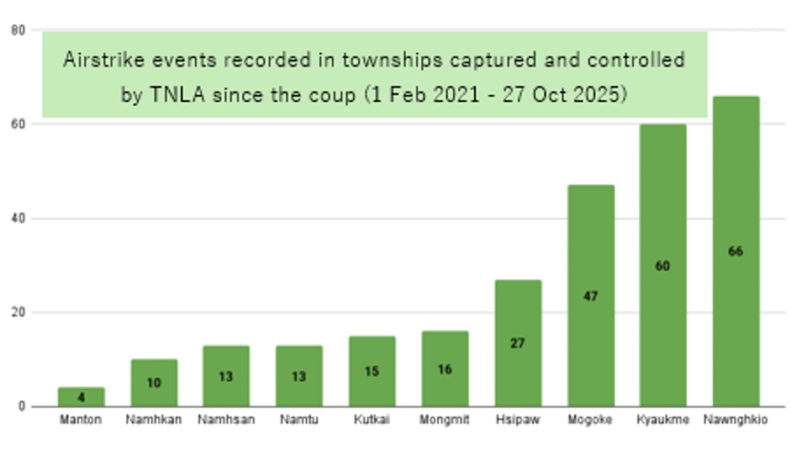
BNI-Myanmar Peace Monitor has recorded 270 aerial attack events on 12 towns captured and controlled by the TNLA since the coup, with approximately 80% of these incidents occurring after the TNLA seized and took control of these areas. Nawnghkio and Kyaukme, which the junta recently took back, are among the towns that experienced the most aerial attacks. Mogok and Momeik, from which TNLA troops will withdraw under the ceasefire agreement, are also among the towns that suffered the most aerial attacks from the junta. [2]
Lashio town, which was returned from the Kokang armed group (Myanmar National Democratic Alliance Army-MNDAA) through Chinese government mediation following an April 2025 ceasefire, also suffered intense airstrikes from the junta.
At the MNDAA cadre rotation training graduation ceremony on 25 October 2025, MNDAA Commander-in-Chief Deputy Senior General Peng Deren stated that the ceasefire deal with the junta is only a phased result, and the path to achieving genuine peace remains distant. [3]
Therefore, when examining the ceasefires achieved between the junta and the two leading groups of “Operation 1027,” which began on 27 October 2023, it is evident that they resulted only from pressure and mediation by neighboring China and the junta’s intensified aerial attacks—clearly not ceasefires for peace.
Simultaneously, the ceasefires are aimed at dividing and sowing discord between the People’s Defense Forces/Local Defense Forces (PDFs/LDFs) that emerged after the coup and the EROs which have existed for many decades.
Major battles loom large over Mogok and Momeik after TNLA withdrawal
The TNLA’s withdrawal from Mogok and Momeik differs from the MNDAA’s situation with Lashio. The TNLA is pulling back its troops rather than transferring control of the towns to the junta under Chinese oversight.
According to BNI-Myanmar Peace Monitor data, over 50% of armed clash events that took place within the two townships after the military coup were between TNLA-led allied resistance groups and the military junta. This highlights the significant role of the TNLA in the areas. [4]
However, the roles and joint offensive operations of the Kachin Independence Army (KIA), All Burma Students’ Democratic Front (ABSDF), People’s Defense Force (PDF) battalions under the National Unity Government’s Ministry of Defense (NUG-MOD), People’s Defense Teams (PDTs), and local resistance groups not under NUG-MOD command have also been observed. These resistance forces continue to launch offensives and put pressure on the junta within Mogok and Momeik townships and adjacent townships.
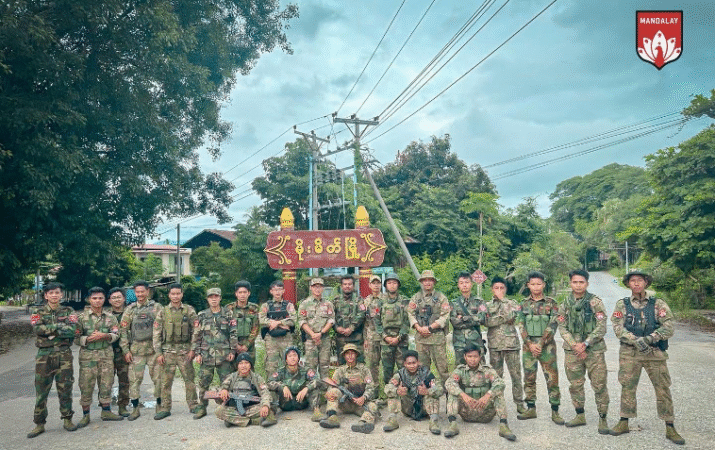
Therefore, despite the withdrawal of TNLA troops from Mogok and Momeik areas, the unified strength of NUG-MOD battalions and other resistance forces, including the KIA and ABSDF, can continue to apply military pressure on the junta. However, if unity building among regional resistance forces and preparation of military tactical approaches are delayed, it could become an opportunity for the junta.
Just as the junta, having recaptured Thabeikkyin from resistance control, is intensifying ground and air offensives to regain control of Singu and Madaya townships controlled by resistance forces, it will not miss the opportunity to regain control of Mogok and Momeik from which TNLA troops have withdrawn. Therefore, in addition to ground operations to deploy troops and establish control in Mogok and Momeik areas, aerial attacks are likely to intensify.
Analysis
Since the onset of their coup, the military junta has intended to isolate the EROs from the Spring Revolution forces opposing the military takeover. They approached the long-established EROs with individual incentives, attempting to prevent them from supporting those opposing the military coup.
On 27 October 2023, when “Operation 1027” led by the Three Brotherhood Alliance, was launched, the junta’s battalions and military headquarters throughout Myanmar faced humiliating losses and even collapse in the face of offensives from Spring Revolution forces. During the coordinated resistance offensive, the junta lost large amounts of weapons and ammunition along with swathes of territory.
Subsequently, the junta sought assistance from Chinese government to pursue ceasefires with Three Brotherhood Alliance. By 29 October 2025, the junta has reached ceasefires with the MNDAA and TNLA – two of the three-member ethnic military alliance. However, the durability of ceasefire agreements obtained through a double-dealing approach using Chinese mediation alongside aerial attacks remains to be seen.
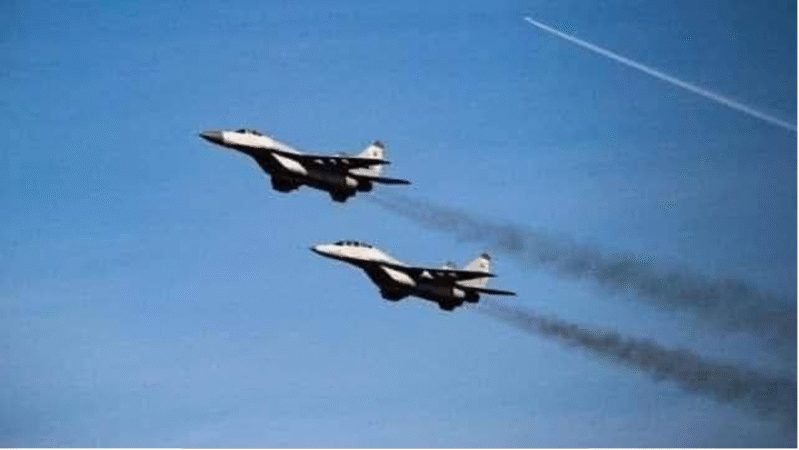
However, the junta’s offensives – projected to intensify with full force in territories controlled by other resistance groups while maintaining ceasefires with the two EROs that destroyed many of their battalions and positions, are not targeting the Mogok and Momeik areas only.
Among the Three Brotherhood Alliance that launched Operation 1027, the Arakan Army (AA) in Arakan State has faced significantly intensified aerial attacks from the junta. All indications suggest that Chinese government pressure and mediation similar to that applied to the MNDAA and TNLA may soon target the AA as well.
Ultimately, it is difficult to view these individual ERO-junta ceasefires as genuine moves toward peace. They represent the junta’s strategy to fracture unity and cooperation between the EROs and the People’s Defense Forces/Local Defense Forces (PDFs/LDFs), including the NUG. With the junta poised to escalate its aerial and ground offensives nationwide, strengthening unity and collaborative actions across resistance-controlled territories is now more critical than ever.
[1] TNLA says withdrawing from Momeik and Mogok to secure ceasefire ‘a difficult decision’, DVB, 30 Oct 2025
[2] Military Junta’s Airstrikes in Myanmar, BNI-MPM, 27 Oct 2025
[3] MNDAA says achieving genuine peace is still far off, Irrawaddy, 27 Oct 2025
[4] Myanmar Armed Conflict Dashboard, BNI-MPM, 27 Oct 2025