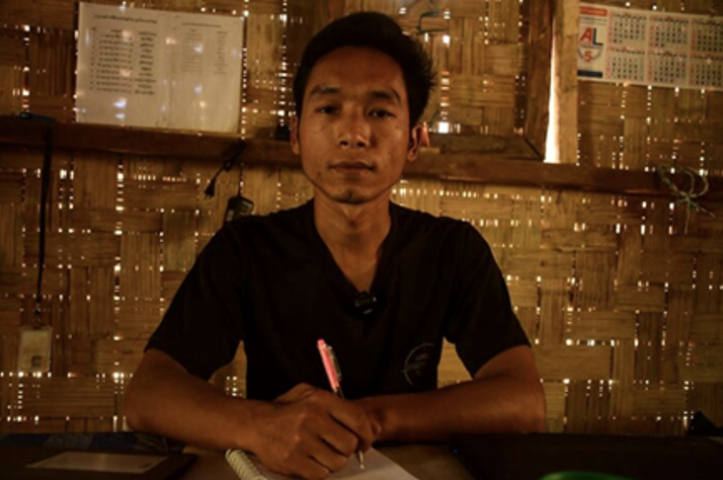
An interview with Khun Robert, Secretary-1 of the IDP Camp Management Committee, about security concerns, as well as the conditions related to food, education, and healthcare for the internally displaced persons (IDPs) at the camp in the Thai-Karenni (Kayah) State, which has been affected by the junta’s aerial bombings.
The Kantarawaddy Times (KT) interviewed Khun Robert, Secretary-1 of the IDP camp committee, about security concerns and the conditions related to food, education, and healthcare for the internally displaced persons (IDPs) at the camp in Thailand’s Karenni (Kayah) State, which has previously been affected by the junta’s aerial bombings.
Q: Please tell us about the food distribution to the more than two thousand people in the IDP camp.
A: When it comes to food, the main thing is rice. With a population of around 3,000, we regularly distribute between 600 and 700 bags of rice per month. The distribution of salt and beans are the same. We regularly distribute 50 bags of bean and around 200 bags of salt per month. We regularly receive rice, salt and bean from donors. We’ve also started receiving cooking oil, which was previously supplied every two to three months. This month, we also have got dry fishes, canned fishes and chilies.
Q: For a population of this size, with a monthly rice requirement exceeding 700 bags, is the current supply sufficient? What is the individual rice quota for each person?
A: We primarily allocate 15 kg of rice per person, with children under 5 years old receiving only 8 kg. For children over 5 years, the quota is 15 kg as well. Every month, 600 to 700 bags of rice are generally sufficient. However, the supply was strained when 200 to 300 new people arrived all at once. Afterward, new arrivals came gradually, with one or two families at a time. Fortunately, the situation balanced out as some people left the camp. Overall, 600 to 700 bags of rice are enough to meet the food needs for the month.
Q: Is there sufficient rice for those with larger families when it’s being distributed?
A: The amount of rice provided isn’t based on the number of family members. However, parents have mentioned that it’s not enough, especially for families with children aged 13 or 14, as they tend to eat more. The ration falls short, particularly for school-age children. When these families come, we provide additional rice to meet their needs.
Q: How many months’ worth of food supplies does the current camp administration have left?
A: Currently, there are only about 40 bags of rice left in the warehouse. Families who have run out of rice are coming to collect the remaining supply, which will last for about a week. However, rations are expected to arrive next week, so it should be fine. At the moment, there are very few supplies left, as donations are only sent once a month. The authorities’ approval was delayed, causing the food to arrive later than expected. As of now, we are nearly out of food.
Q: The rice, oil, and dry rations provided by the administration are limited. So, how do the IDPs manage to find food for their meals?
A: It’s not easy for the IDPs. From what we know, they mostly rely on seasonal crops to generate income. For example, they gather bamboo shoots, but now that these are no longer available, they turn to banana stems and banana buds as a substitute. This is how they manage to get by, though it’s a tough situation. There is no water for agriculture, which makes it even harder, especially when it comes to preparing curries. We also provide 1 kilogram of beans, but it’s certainly not enough to last a month. Some IDPs are able to buy meat and vegetables when they receive money from relatives, but those without family support often have no choice but to gather vegetables and seasonal fruits from the forest.
Q: How is this IDP camp managed by the administrative department?
A: Our main focus is food security, but we also manage other areas such as ration distribution, road transportation, and ensuring water availability for the IDPs. If a road is damaged during the rainy season, we take the lead in coordinating repairs with the community. Additionally, we handle various projects, including resolving disputes and marital issues, as well as conducting weddings. The education sector requires collaboration as well, especially when it comes to the emergency relocation of schools. We are responsible for overseeing multiple sectors, including security.
We have a clear division of labor among our employees, with different departments handling specific tasks. These include food distribution, office management, fishing workers, security, and ward affairs. The ward affairs are managed by ward administrators, 10-household heads, clerks, and auditors.
Q: The aerial threat from the military council is indeed concerning. How are you disseminating security information to the people in the IDP camps?
A: The key focus is preparedness. We regularly announce safety measures to the people and stay updated with information online as much as possible. We keep them informed about any unprovoked attacks on civilians and emphasize the importance of being prepared. We’ve advised them to build strong bomb shelters and maintain them regularly. Additionally, we’ve set rules such as avoiding turning on lights, not riding motorcycles at night, and refraining from using the internet. These measures are all part of our preparedness efforts. This is all we can do. Security guards also conduct nightly patrols to ensure safety.
Q: Do the displaced people engage in this knowledge dissemination?
A: Many people do participate, although it can be difficult for some, especially the elderly. For example, it’s challenging for them to go downstairs at night without turning on the lights, and we can’t put too much pressure on them. Similarly, there are children who need to study, and we have to be understanding of that. Aside from these challenges, the rest of the community is actively involved. They have experienced these threats themselves, so they understand the importance of following the safety measures when I explain them.
Q: What is the situation regarding the availability of medicines at the clinic? And what about public healthcare?
A: Medical supplies are still available as usual. We’re seeing some cases of itching, along with the typical seasonal coughs and runny noses. People continue to receive primary healthcare regularly. Childbirth is going well, and maternal and child care services are also being provided consistently.
We’ve heard that it’s very difficult for some patients to be transported to the hospital. During referrals, we often have to wait for permission from the Thai authorities, which sometimes leads to the loss of life. For example, when we’re waiting for permission, childbirth can occur, and there have been cases where children have lost their lives in such situations. The most challenging aspect is the referral process.
Q I’ve also heard about students who are no longer able to attend school due to security concerns and are being relocated. What is the situation like in this regard?
A: Due to security concerns, we have to relocate schools to safer areas. This relocation process makes things more difficult for teachers, students, their parents, the public, as well as for us and the ward administrators. To make matters worse, learning in these more secure locations has brought about health issues. For example, the unstable and cold weather is causing some children to fall ill.
Q: Is there anything you would like to add?
A: There’s nothing special, but I’m unsure how the food situation will unfold in the future. I’d also like to appeal to donors. Most of the IDPs primarily rely on donations, not just for food, but for non-food items as well. We can’t do agriculture here, and many people are jobless, so they depend on the support from donors. I’d like to urge donors to continue their contributions and encourage others to donate as well. That’s all I want to say.
Sent by Kantarawaddy Times