Diverging Approaches to the Myanmar Crisis
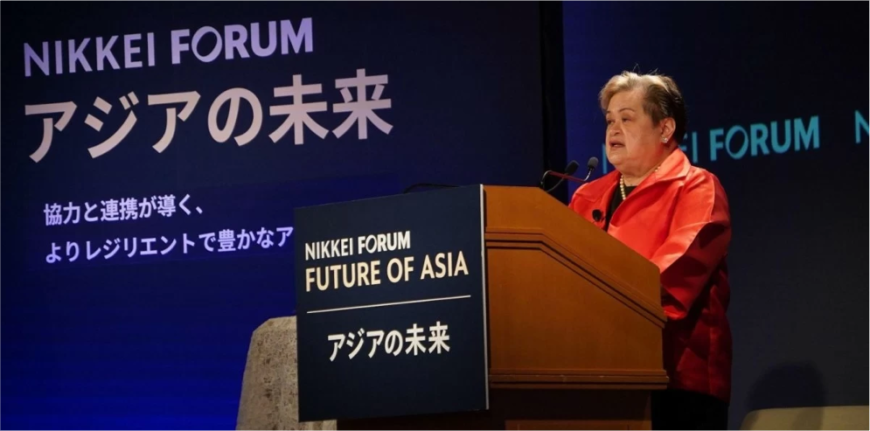
The current ASEAN Special Envoy on Myanmar, Philippine Foreign Minister M. Theresa Lazaro, stated at the NIKKEI FORUM in Tokyo, Japan, that she plans to meet with Myanmar’s Ethnic Resistance Organizations (EROs) in the near term. She noted that the meetings are being arranged so that ASEAN can gain a fuller picture of the current ground situation in Myanmar in order to deliver assistance more effectively. 1
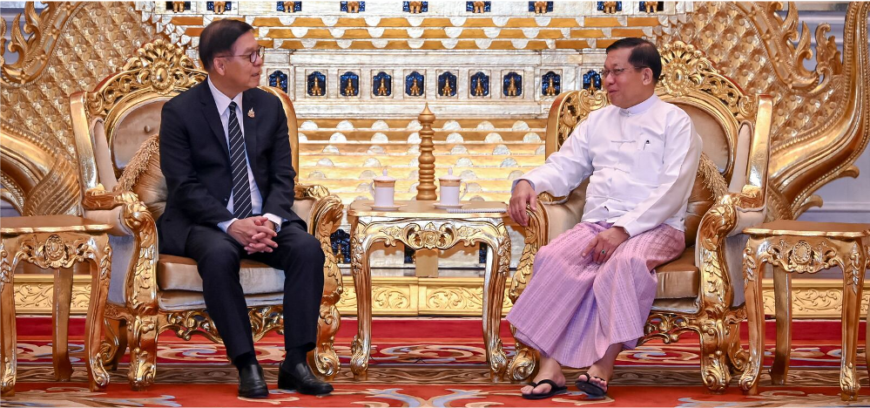
On another front, Indonesian Foreign Minister Sugiono traveled to Nay Pyi Taw on 8 June to meet with junta leader Senior General (Ret.) Min Aung Hlaing. Indonesia’s Foreign Ministry stated that Indonesia reaffirmed its commitment to to fostering inclusive and lasting peace in Myanmar, and expressed its readiness to cooperate with all stakeholders in Myanmar and to support efforts to resolve conflicts peacefully. 2
He further emphasized that a sustainable peace process must be led and owned by Myanmar itself, and that implementing ASEAN’s Five-Point Consensus as a framework for addressing Myanmar’s multifaceted crisis remains critically important.
Thai Foreign Minister Sihasak Phuangketkeow stated that some ASEAN member states are willing to reassess their approach toward Myanmar’s military junta, and no longer wish Myanmar to remain isolated.
Thailand aims to serve as a bridge between Myanmar and ASEAN, while Sihasak stated that the military junta must respond to ASEAN members’ concerns regarding the implementation of the Five-Point Consensus – including reducing violence, establishing credible dialogue, and enabling the delivery of humanitarian assistance. 3
One thing remains clear: the approaches of the current ASEAN Chair, the Philippine Foreign Minister, and the Indonesian Foreign Minister toward resolving Myanmar’s crisis are clearly oriented toward inclusive dialogue and advancing implementation of the implementation of the Five-Point Consensus – whereas Thailand appears focused primarily on prying open a pathway to reintegrate the military council into ASEAN.
It must therefore be underscored that ASEAN and its member states — entrusted with resolving the Myanmar crisis and backed by the international community, including the United States, the United Nations, and the European Union — must engage honestly and openly not only with the military council, but with all conflict parties, including the National Unity Government (NUG) and Ethnic Resistance Organizations (EROs).
1. Philippines foreign minister says she plans to meet Myanmar ethnic groups soon, The Straits Times, 10 June 2026
2. In Naypyidaw, Foreign Minister Sugiono expressed Indonesia’s solidarity with humanity and support for peace in Myanmar. 9 June 2026
3. ‘The ground is shifting somewhat’: ASEAN does not want an isolated Myanmar, says Thai foreign minister, CNA, 5 Jun 2026