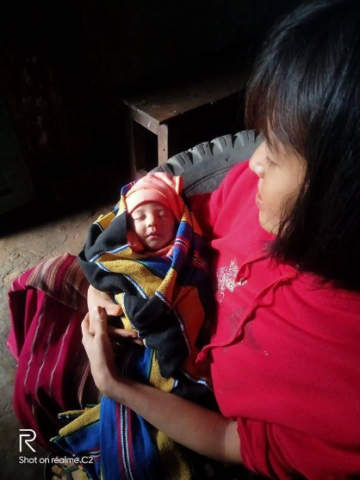
Routine vaccination of mothers and infants in conflict-affected areas within Karen National Union (KNU)-controlled territory has become more difficult following the recent military coup due to transportation and security issues, according to the Karen Department of Health and Welfare (KDHW).
While some vaccinations are still being administered in internally displaced person (IDP) camps along the Thailand-Myanmar border, security and transportation problems are making it difficult to deliver vaccines to more remote areas, said a KDHW maternal and child health official.
“Before the coup, we were able to vaccinate both mothers and children in our target areas. Now we can get the vaccines near the border, but in the conflict-affected areas, our health workers have transportation and security problems. So they can’t deliver them yet. It is no longer possible to bring the medical supplies back to Myanmar, although we are making some arrangements,” the official said.
In addition to malnutrition from displacement and lack of access to supplies, young children are more vulnerable to infectious diseases than vaccinated children because of their weaker immune systems, she added.
A displaced man from the northern Hpa-An Township in Karen State also said vaccination campaigns were halted after Myanmar army offensives forced villagers to flee their homes.
“Before the war, they used to come twice a year and do vaccinations. She is the only nurse here. Even children from the Karenni (Kayah) side came and got vaccinated. At that time, children from conflict-affected areas also came. But because of the fighting, this kind of activity has stopped,” he said.
According to health officials, children should be vaccinated against hepatitis B, polio, tuberculosis and influenza from birth to one year of age. They also recommend vaccinating children against diarrhea and influenza, which occur at 6-8 months of age.
In conflict areas controlled by the KNU, the military regime’s restrictions on access to medicines and arrests have made it difficult to get vaccines to IDP camps, while medical care has also been delayed, local IDP assistance groups report.
Sent by KIC.