Voices of Mon Youth on Digital Violence – Vox Pop
While the rapid advancement of digital technology has greatly benefited daily life, it has also brought about various forms of digital violence targeting women, LGBTQI+ individuals, and minors.
25 November to 10 December—International Human Rights Day marks the “16 Days of Activism against Gender-Based Violence,” and this year’s theme focuses on violence perpetrated through digital and online platforms.
In 2025, online violence and human trafficking targeting women and minors within Mon State, including areas controlled by the New Mon State Party, have continued to rise. Efforts are still underway to find ways to provide psychological support to victims.
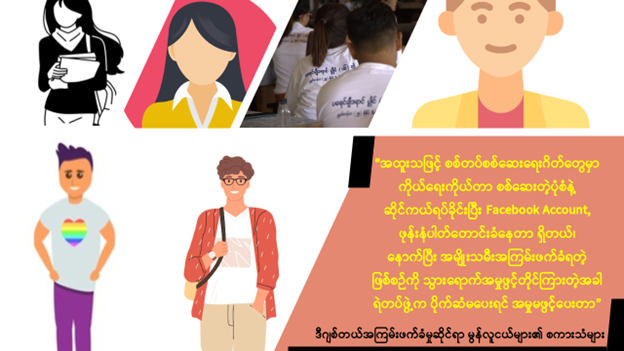
According to interviews conducted by the Independent Mon News Agency (IMNA) regarding the “invisible barriers” behind this violence, young men, women, and LGBTQI+ individuals stated that legal and social barriers are the primary obstacles in addressing digital violence.
A Female Mon Youth Activist

Based on our experience with digital violence, I think the reason youth are increasingly threatened in certain sectors is that today’s youth ‘worship’ love. As soon as they become a couple, they exchange account passwords. When things don’t go well, the girls suffer. Men leak their privacy online. They use photos as threats to keep them from leaving. That is one way they are being abused.”
Digital violence happens for various reasons; women especially, but LGBT individuals are also suffering. There is even violence between men. What I want to say is that digital danger can be more harmful than physical danger. That’s why youth, women, LGBT, and men should all study digital literacy thoroughly. Your personal safety must be the first priority. Don’t be too trusting. Also, modern drugs are appearing in various forms. Only by knowing the pros and cons of these things and how to protect oneself can we eliminate the consequences of digital violence.
A Female University Student
I see most youth using social media like Facebook, Messenger, and TikTok more than necessary. Most digital threats happen to girls between the ages of 15 and 20. Some flee with other men because they fear their reputation will be ruined in front of their parents, relatives, and community. Some parents are afraid to speak up to protect their child’s dignity. Since the coup, many young women have also faced physical and verbal sexual harassment. Especially at military checkpoints, they stop motorbikes under the guise of personal inspections and demand Facebook accounts and phone numbers. Furthermore, when reporting violence against women, the police won’t open a case unless paid. In rape cases, many families settle with money. To put it simply, we are losing our legal protection.
An LGBTQI+ Mon Youth

Online threats have increased significantly since the military junta took power. It happens in this order: women are affected most, then men, then LGBT. These incidents existed before, but they have increased after the coup. For men, there are anonymous calls and lewd messages. For women, there are threats on Telegram. For LGBT, there are threats involving AI-generated images related to their identity; this has increased in 2025. People take advantage of youth to threaten them; this happens more online than in person.
I also want to mention legal threats. Some people post non-political content online, but members of the junta’s election commission take screenshots to threaten them. These threats aren’t just legal; there are many financial extortions. It’s not just sending lewd photos; sexual harassment has also increased significantly.
A Young Mon Man

As internet use develops in almost every country, social media usage grows year by year. Along with that growth, threats are increasing. For example, if an unscrupulous person gets a photo of a young girl, they use AI to create lewd images and threaten to leak them unless she pays—that is a form of digital violence. In the age of social media, this has become very easy. Men are also defrauded and abused by strangers in various ways. Because some don’t realize they are being victimized, many lives are ruined.
These issues don’t discriminate between male, female, or LGBTQI+; everyone is being threatened. Despite this, the laws to protect them are still weak. I think it happens more often because the law is weak. It’s also due to the political situation. We see what’s happening online ourselves, but we are helpless. In this state of lawlessness, those with power always win. Because protective laws are scarce, sexual threats, harassment, and extortion have become much more blatant and frequent since the military coup.
A Young Male University Student

Sexual exploitation has happened a lot in our country and is still happening. We learned about these horrific matters early from victims of online sexual exploitation. We are still looking for ways to heal the trauma of those affected by the malice behind these tactics. For example, profiles with women’s photos, names, voices, and bodies—these are often not women. With technology advancing, they even show videos of other women during video calls to deceive victims.
They might blackmail and shame you when you aren’t in contact, when you get married, or when you become famous—threatening to send materials to your family, partner, or fiancée. This can impact your social circle, your future, and your job. Now, there is even the possibility of AI creations. My suggestion is: if we want a peaceful society, we ourselves must not commit violence. We must protect against violence, provide support and comfort, and I urge everyone to build a peaceful and beautiful society by not blaming the victims.
Independent Mon News Agency