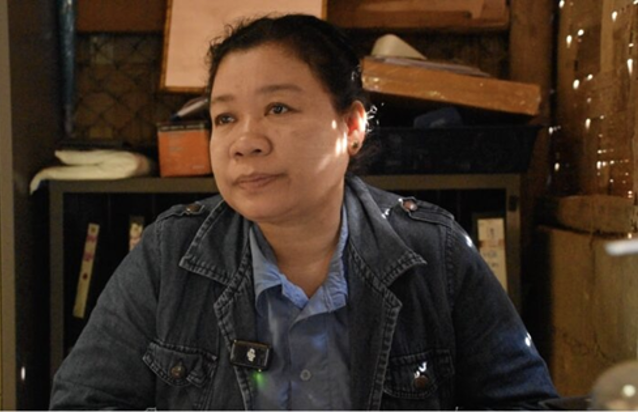
An interview with Naw Ku Paw, Director of the Karenni Health Department (KnHD), about the challenges and difficulties the department encounters while delivering healthcare services in the Karenni refugee camps along the Thai-Myanmar border.
As a result of the US government’s temporary suspension of international aid for 90 days, the health services provided by the International Rescue Committee (IRC) to refugees on the Thai-Myanmar border have been put on hold.
Despite the challenges, the Karenni Health Department (KnHD) continues to provide healthcare services at No. 1 Karenni refugee camp based on the urgent needs of refugees. They are offering care to emergency patients, outpatients, and those with hospital appointments by keeping the clinic open regularly from Monday to Friday, with hours from 9 am to noon and 1 pm to 3 pm.
Although the clinic remains open regularly, only a limited amount of medication is available for patients. Additionally, when emergency cases require hospital transfer, transportation has become a significant challenge.
Kantarawaddy Times interviewed Naw Ku Paw, Director of the Karenni Health Department (KnHD), about the public healthcare services being provided to refugees at the Karenni refugee camps on the Thai-Myanmar border, as well as the challenges, difficulties, and needs the department faces in delivering healthcare.
Q: First, First, can you explain the impact on healthcare services in the refugee camps following the US government’s 90-day suspension of aid to refugees?
A: Since 28 January, our clinic has been closed. However, for emergencies, we continue to assign staff to work in three shifts to attend to inpatient and emergency cases. When patients arrive, we unfortunately have no medicines available. As a result, they have no access to medication. In such cases, we advise patients on how to protect themselves and find alternative sources of medicine, even though we cannot provide it directly at the clinic. Our clinic reopened on 4 February due to the increasing number of emergency patients. There was a significant outbreak at Camp-2, with a rise in respiratory diseases and a slight increase in diarrhea cases, which has raised our concerns. Given the circumstances, we decided to resume operations five days a week, as we are concerned that without proper care, there could be a risk of fatalities.
Q: How is the availability of medicine now? Previously, the IRC supplied the medications, so how are you managing the situation now?
A: We have heard that the IRC is now sourcing medicines through other donor funding. We are required to report our medicine needs to them on a weekly basis, and they distribute the medicines to us accordingly. Additionally, when there is a shortage of supplies, the Karenni Health Ministry provides us with some medications. We are currently operating with their support.
Q: What changes have taken place during the 90-day period following the suspension of aid by the US government?
A: We held a meeting with the IRC, during which we outlined our plan to carry out emergency lifesaving activities, although it has not yet been officially approved. Regardless, we will proceed with these activities, which will continue for the next three months (90 days). We have already submitted the case activities to them as requested. However, we will need to reduce the number of staff involved in these activities. Currently, we have nearly 220 health staff members.
We will have to halt some programs in order to focus on case activities, which mean suspending certain staff positions. If we receive donor funding, we will continue these activities with over 100 staff members. This is a significant challenge. In total, there is more than 200 staff when combining both camps, and some regular services will be impacted. Community healthcare services, particularly those focused on prevention, will also have to stop. Nearly all work will be suspended over the next three months. We also have staff dedicated to mental health, with Community Health Workers (CHWs) assigned to Camp-1 and Camp-2. As some staff will be reassigned to case activities, other tasks will be limited. Clinics and larger health facilities will be short-staffed, with two or three staff members suspended. The situation is not normal anymore; everything is now severely limited.
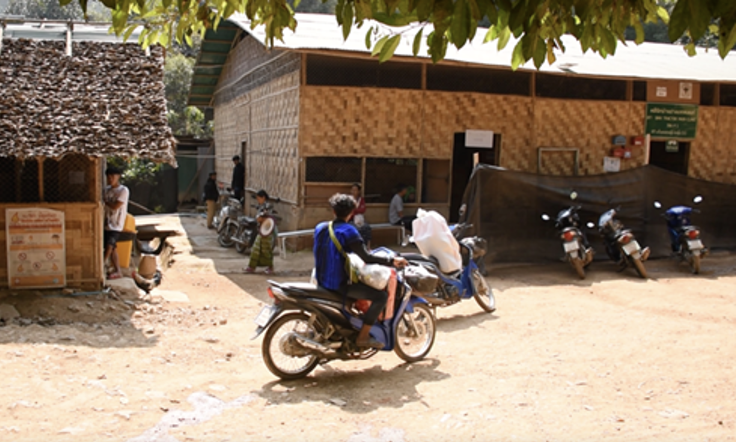
Caption – A Karenni refugee camp on the Thai-Myanmar border.
Q: Given the current human resources, which areas of healthcare services are being prioritized?
A: The first priority is to treat both infectious and non-infectious diseases. We will provide treatment for those who are seriously injured, followed by general treatments. Medication management will also continue. We will keep the Health Information System (HIS) in place to track disease trends, identifying which conditions are increasing or decreasing. Reproductive and Child Health (RCH) services will also be maintained. Regarding maternal and child welfare services, we continue to provide regular family planning, but it is no longer part of the essential Emergency Life Saving activities. Services such as child vaccination, prenatal care, childbirth assistance, and healthcare for children under five will continue. However, broader maternal and child welfare services will be suspended. The laboratory department, which is essential for diagnosing diseases, will remain operational. The three major departments—medicine, mental health care, and essential treatments—will continue to function. These are our top priorities, while all other services have been halted.
Q: What are the main difficulties and challenges you are facing?
A: The main challenge we are facing right now is handling emergency patients who need to attend essential hospital appointments. For example, patients with chronic diseases or those who cannot stop their medication, as well as those with scheduled appointments, are facing difficulties. One of the biggest issues is the lack of transportation. Camp-2 is especially affected, as patients themselves have to arrange vehicles. The cost to hire a vehicle to Khon Yone hospital is 2,000 Baht one way, making the round trip 4,000 Baht. For Mae Hong Son hospital, the cost is around 3,000 to 3,500 Baht one way, though I am not sure of the exact amount. The situation is much worse for Camp-2, as it is farther and the transportation costs are higher.
Currently, the vehicle from the Karenni National Relief Committee (KnRC) at Camp-1 is assisting us. However, KnRC can only provide transportation when it is not busy with its own work. They prioritize sending follow-up patients and handling emergency cases, both day and night. While KnRC continues to support us, this remains a significant challenge. The drivers are also facing difficulties, and when patients arrive at the hospital, we have to use the KnRC logo on the patient handover forms, as we are not allowed to use the KnHD (Karenni Health Department) logo.
This is due to the PRM fund, which is linked to the IRC. As per the instructions, all activities must be halted, and the use of our logo is not permitted. Since we are required to use the KnRC logo, some hospitals are asking patients to pay for their expenses. However, not all patients are required to pay these fees.
We currently have oxygen and gas cylinders, and we use steam pots to sterilize bandages. Materials are also sterilized after providing care to pregnant patients. However, the gas and dry batteries needed for emergency patients have run out, and there is no one available to transport patients.
Q: Have you reached out to the Karenni State government for assistance?
A: We have requested help from our government. The government provides transportation for medicines by car, but we still need funds for gas, oxygen refilling, and battery recharging. These are the challenges we are facing. Both Camp-1 and Camp-2 are experiencing similar difficulties. We require vehicles for patient transportation and charging fees. We have reported these issues to the government through the health department. Currently, the ministry has mentioned that it will request the government to cover the charging fees.
Q: Are you using the clinic’s equipment with the IRC’s permission? What is the current situation?
A: The IRC has taken the oxygen and gas cylinders, but some have been kept for emergencies. We are facing difficulties as there is no donor to refill the cylinders. When we reached out for help from the ministry, they recently sent some funds, though I’m unsure of the exact cost to refill the cylinders.
The worst part is that if we have an emergency patient at night, we have to rely on the generator. However, we have no diesel or gasoline. In the laboratory, we need the generator to diagnose diseases, as we rely on it to power the microscope. Unfortunately, there are no donors available to help us purchase the necessary gasoline and diesel.
Q: Do hospitalization costs vary depending on the type of treatment or disease?
A: Some patients incur significant costs. For example, a patient admitted for appendicitis may spend more than 20,000 baht, while a delivery patient may incur costs exceeding 15,000 baht. These high costs create a heavy financial burden on people. One patient, for instance, didn’t visit the clinic when it was closed. When others encouraged him to go, he replied that he couldn’t afford the trip to the clinic.
The patient knows that if they go to the clinic, they will eventually need to be sent to the hospital. One patient, who was aware of their condition, arrived at the clinic in the evening unconscious. They were sent to the hospital the next morning but unfortunately passed away shortly after. This highlights the severe challenges we are facing. At that time, patients didn’t know who would help or who would cover the costs, so they had to go to the hospital using their own money. Some people, unable to afford it, couldn’t make it to the hospital in time and tragically lost their lives. Camp-2 is located in a remote area, so transportation costs are higher. A child passed away at Chiang Mai hospital because they arrived too late. The child had contracted a respiratory infection, which led to the death. Another child has also died, bringing the total number of child fatalities to two.
Q: How many patients currently visit the clinic at this camp (1) per day?
A: The clinic sees between 80 and 120 patients a day, with some outbreaks occurring. Diseases are more common during seasonal changes, such as respiratory illnesses.
Q: What other concerns do you have regarding the health sector?
A: I’m unsure whether they will allow it after the 90-day suspension, but regardless of their decision, we will continue to serve our people. We will keep seeking the necessary help, making every effort to improve the situation until things return to normal. It will be a gradual process. We would be very grateful if aid continues, as we are in great need of assistance right now.
The ministries are aware of these difficulties and will try to find a solution through diplomatic channels. However, a resolution will not be immediate, and we will need to make gradual efforts. We have reported our challenges and are exploring alternative funding sources beyond PRM. This process has already begun.
Q: What changes are anticipated after the 90-day suspension of health services at the refugee camp?
A: Our expectation is that if the situation isn’t resolved within 90 days, it would be ideal if Thailand took responsibility for the refugees. However, if they don’t, we will continue to provide healthcare services within our capacity. We will do our best to seek help for our people and our region.
Sent by Kantarawaddy Times