
An interview with Naw Khin San Htwe (aka) Poe Dah, General Secretary of BWU about the BWU’s actions for justice for women affected by the conflict.
The Burmese Women’s Union (BWU) held an event in Chiang Mai, Thailand, on 17 September, to showcase short films aimed at amplifying the voices of women affected by conflict.
Shanni Voice interviewed Naw Khin San Htwe (aka) Poe Dah, General Secretary of BWU, about the purpose of the short films and the pursuit of justice for women affected by conflict.
Q: Tell us the purpose of introducing the four short videos titled “Breaking the Silence, Empowering Survivors for justice and stigma reduction”?
A: This event aims to shed light on the fact that currently women in Myanmar continue to suffer from conflict-related sexual violence and help them become more involved in the process of finding the path for emergency aid and justice by reducing blame and discrimination by the environment on survivors.
Q: Among these four short films, the film titled “The Dirty Women” highlights the oppression and unfair treatment of women in society from traditions and customs. Which region and what kind of society in Myanmar is this short story based on? What other traditions and customs in Myanmar highlight the unfair practices that target and oppress women?
A: As the title “The Dirty Women”, in Myanmar, women who have been sexually assaulted and raped are still being discriminated against them by labeling them as “dirty women” or “bad women” by people around the community even now. This story is based on the case in northern Shan State. The similar traditions and customs are being practiced in other ethnic areas. The reason we want to show is the traditions and customs cause additional harm to women who have been sexually assaulted in normal times and amid the armed conflicts with heavy weapons and aerial bombings. It causes you to experience death multiple times. We need to change these harmful customs because of the unwanted consequences.
Q: What will BWU do next in terms of breaking the silence in order to get justice for survivors and escape from the shadows of the past?
A: For the survivors, the BWU will continue to provide emergency aid in terms of health, security and livelihood, based on the need of each individual and each family for the short-term. We have been carrying out systematic documentation in order to obtain justice for the long term. These records are meant to serve as evidence for prosecuting perpetrators and to be able to work more effectively in the rehabilitation of survivors.
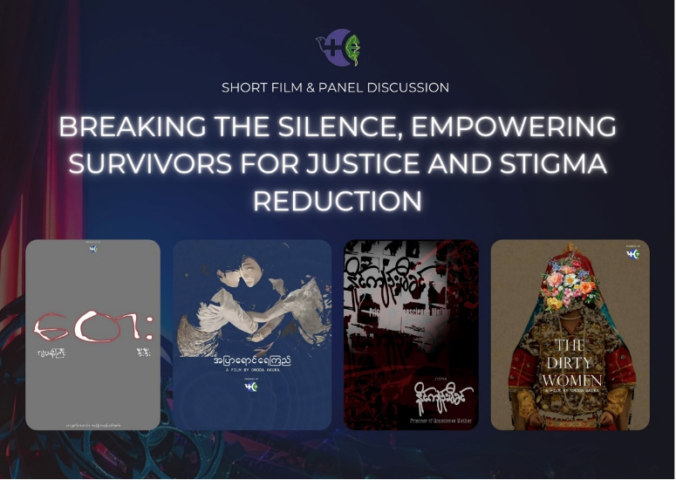
Caption – Four short films produced by BWU.
Q: In the short film “Blue Water,” the experiences and emotions of women who have been sexually assaulted are poignantly depicted. What advice does BWU give to women in these situations? Have you developed any justice programs or measures to support them?
A: Currently, women from conflict and war-torn areas in Myanmar are subject to sexual violence. In cities like Yangon where there are no battles, the life of women is not safe. We aim to highlight the various forms of sexual violence that women endure. We prefer not to explain further, as we want viewers to connect with the feelings and ideas conveyed through these films. BWU encourages women who have experienced sexual assault, whether in conflict-affected areas or urban settings, to break their silence and reach out for help, either to BWU or other trusted organizations. If you’re not ready to share your story, that’s perfectly fine. You have the choice to keep it private. As a first step, they need to consult with experts for necessary help. There’s no need to feel insignificant, as these issues are neither shameful nor repulsive. So, as a first step, instead of feeling alone, we encourage you to reach out to trusted persons for help.
Q: It is known that BWU also monitors and documents sexual violence related to armed conflicts. What is the current situation, and what impact does this violence have?
A: The BWU is actively tracking and recording cases of conflict-related sexual violence in our target areas using trained local data collectors. We are also providing assistance for the emergency needs of survivors. However, the overall security situation and ongoing conflicts in the country impose significant restrictions on our efforts.
For example, our staff in the country face significant security challenges while collecting data and documenting sexual violence committed by military and revolutionary forces. Survivors often hesitate to speak out due to safety concerns. In addition, there are numerous challenges on the ground. Despite these difficulties, we remain committed to documenting these incidents and raising awareness among relevant groups. We will do our utmost to continue this vital work.
Sent by Shanni Voice