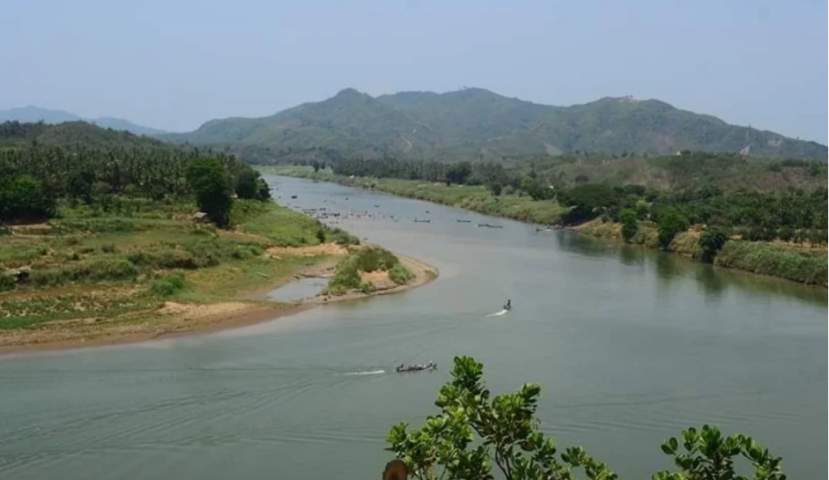
Despite the recent ceasefire in Arakan State, the military council reportedly continues to obstruct the transport of rice, medicine, and construction materials to nearly 50 villages in the Dar Let Chaung area of Ann Township.
The regime reopened waterways closed on October 13 and land routes in Dar Let Chaung on November 1, but transport of rice, medicine, cement, and fuel continues to be restricted.
“We can no longer transport as much as we want. For example, we need 10 cards of medicine, but they only allow five. The same is true for transporting rice. We can’t carry as much as we want. They have put a cap on the number of bags of rice that five people can take,” a resident of Dar Let (North) village told Development Media Group (DMG) on condition of anonymity.
Similarly, the transport of cement into the area is only allowed for the construction of schools or religious buildings, or for junta-linked construction projects such as hospitals or clinics, which restricts the construction of other houses and private construction work.
“When we [junta soldiers] asked at the checkpoint why we weren’t allowed to transport cement and other materials, they just told us that it was by order from above,” he continued.
DMG was unable to reach junta spokesman Major General Zaw Min Tun and Arakan State Minister of Security and Border Affairs Colonel Kyaw Thura for comment.
If residents of Dar Let Chaung region want to reach Kan Htaung Gyi Town and Myebon Township, they have to pass through Ahlel Kyun, Jade Chaung and Kazu Kaing checkpoints. Even if they choose the waterway, they have to pass Kazu Kaing checkpoint.
At these gates, locals are strictly controlled by the regime’s soldiers, and those who are on their list of suspicious names are immediately arrested, said a resident of Dar Let (West) village.
“They check people very thoroughly both by land and by sea. They check our NRCs and relay the personal information to above. Those who are on their list of suspicious people are arrested immediately. Perhaps those who are on the list of suspicious persons are those who are associated with the United League of Arakan/Arakan Army (ULA /AA),” he said.
Dar Let Chaung village comprises a total of 48 villages, including Dar Let (South), Dar Let Ywar Haung, Dar Let (West), Shan Kone and Ahlel Kyun, with a population of over 12,000, most of whom make their living from logging, bamboo cutting and hillside farming.
Similarly, residents of Dar Let can reach Chuang Ann and Kazu Kaing by water and land, and Kan Htaung Gyi by water to buy consumer goods such as rice, salt and cooking oil.
Since the recent resurgence of armed conflict in the state, people in Arakan State have become innocent victims of war and many people have lost their lives. Therefore, social organisations in Arakan State have urged that the people of Arakan be allowed to freely transport goods they need.
“If the restriction on food transportation continues like this, we won’t die because of the fighting, but will suffer even more because of the lack of medical supplies. Therefore, the military council should consider allowing all people living in any region of the country to freely transport goods,” said well-known social activist Ko Ann Thar Gyi.
The military council closed land and water routes after fighting flared up again in Arakan State. After an informal cease-fire with the ethnic Arakan Army, the regime reopened some of the routes but continues to restrict the movement of goods and medicine to some areas.
Sent by Aung Htein (DMG).